Word of caution: hinges that look beefy sometimes are... not. Make sure they are rated for your door - and yes, make sure your screws have enough bite or the door will fall off!
Re. hinges installation:
Hinges with unequal leaf widths; the broad leaf is fitted to the frame and the narrow leaf to the door. Where the hinges have equal leaf widths, the leaf with more knuckles is fitted to the frame and the leaf with less knuckles to the door.
A good brand in the UK is Ratman - very highly specified butt hinges.
http://www.ratman.co.uk/H1250_product.html
I got those ones. They do cost a bomb but I guess the alternative is a door falling off...
You think these'll hold? Seems I'd need some pretty long, strong screws too, no?
That looks like a five knuckle, full mortise ball bearing hinge:) That piece is a standard weight hinge for medium weight doors, depending on who made it. The thicker the leaf hinge plus additional bearings per hinge designate weight classification and the ability of the hinge to handle more traffic with less wear on the hinge.
The hinges should have come with screws, yes? Anyway, if it is 4 to 5 inch's tall, a wood screw 1-1/4" x #12 is suggested by manufacturers that matter, like Hager.
All true xspace. And sometimes, appearance can be deceptive - this hinge looks remarkably similar to the one Pure L posted the picture of, and is a $5 hinge that definitely won't hold a 150kg door for very long, so caution should be taken.
Also, if the doors are equipped with a door closer then the hinges should be rated for the adjusted door weight and not the actual door weight.
Finally, be aware that adding more hinges is not the solution - fitting six hinges rated for half the weight of your door won't do, fitting three (or four depending what the manufacturer says) hinges rated for the full adjusted weight of your door is the only way to go.
LOL I know xspace but I've learnt so much on this forum from people preaching to the choir including some of your posts that I thought I'd share what I can - most of the seniors here know all that stuff but if that can help someone who doesn't then I've paid it forward a little, name of the game innit?
yup, can't hurt to repeat (common?) knowledge.
Or even discuss common techniques!
Absolutely Ro, what's common stuff for some is new knowledge for others, and without the seniors and other experts like John, Rod, Eric, Ethan, SoundMan, xSpace, you and many others here, repeating what they know I wouldn't have learnt so much. Talking fo which... if you fancy paying another visit to my thread, regarding room ratios I could do with a knowledgeable hand there :thu:
I appreciate your vote of confidence Pierre, but an expert is someone who gives lectures on subjects and is paid for this. I just swing a hammer and recall what I have seen or done, gratis :)
Ratios: The new acoustic myth or the end of all your sonic woes?
I have read as much on ratios as the next person. Started with the golden ratio some years ago when I was trying to get a handle on this myself. Then moved on to ratios that noted authors have shown as preferable and not so preferable.
Having seen few purpose built structures here or in my work in conference rooms, lecture halls and auditoriums that seem to stumble on these ratios for any length of time, I wonder why others still stub a toe at this point in the build. Maybe as a starting point, a reference, a guide to make certain you are not building a square room or one with boundary lengths/heights with two of the same dimensions.
Outside of that, the acoustic treatments will still be applied, and testing is what is going to verify what treatments will be used.
Splayed walls, soffited speakers, soft ceilings, most of the boundaries typically change in all manner of degree. Averaging the ratios does not work because they were not established as a decimal to be multiplied by.
In any event, if the most perfect ratio cannot be achieved to what end does it serve us to even consider using the second most or third most?
What is really gained with the first most that cannot be treated such that any issues created by a less than stellar ratio combination can be made to go away?
Is that just me?
John Sayers said recently, I'll paraphrase, "I have never used ratios in my life".
edit: The actual phrase is "...I've never worked out a mode in my life."
viewtopic.php?f=1&t=13030&start=0
I consider him an expert, even if he may not be on the lecture tour.
+1 on that 8)
Yes. There are several things that could lead people to go nuts about it. Its like gearslutz. "what pre do I use for this??" "what AD converter should I use for 6 string acoustics??"
There is an invisible line between having a starting point and using it at your favor, and going nuts and try to get the most isolated room, with the most perfect ratio, the most perfect bass trap, and suddenly we all forget why we are here: MAKE MUSIC !
Hey guys
Any ideas on how to "lock" the door besides puting a "lock" ??
Maybe puting some fabric on one side so it "closes tightly" ??
I dont have access to any kind of magnetic door deals here (i dont even have homosote ! lol )
So I need a really DIY solution
Yup!
I'll get one an install it !
I hope it really pushes the door hard to keep it "closed" and not "oh, it needs just one more push to get closed" thing, because the neoprene seals kind of make the door closing very tight
:mrgreen:
Yup!
I'll get one an install it !
I hope it really pushes the door hard to keep it "closed" and not "oh, it needs just one more push to get closed" thing, because the neoprene seals kind of make the door closing very tight
:mrgreen:
I use a combination of a door closer and five magnets (6kg each) glued into the doorframe and some screws at the magnet points in the door.
works perfect for my DIY door, and this beast is realy heavy. 3 sheets of MDF (1st layer 19mm, 2nd layer 21mm, 3rd layer 16mm)
cheers
Mika
Did you use those small magnets? Like for kitchen's furniture
No.
I use high performance magnets which you can order easy in webshops.
Mine have a diameter of 10mm and a legnth of 15m.
https://www.hkcm.de/product_info.php?pr ... e3c9bb7572
it`s not that type i used, but it`s nearly the same.
There are alot of different forms, with different power.
I`m sure you will find a shop like these in your area
cheers
Mika
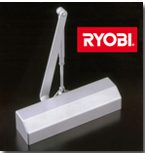
I bought the door closer. Now I just hope it closes my door!!
Any of you could estimate how much my door weights?
Its two sheets of 25mm MDF, plus two sheets of 9mm MDF, plus the MLV sheet
The door is 218mm x 80mm
EDIT: I just did a rough estimate considering that a 25mm (1") sheet of MDF weights like 60kg. Thats 21kg per square meter
My door's surface is 1.7 m2, so my door roughly weights like 80kg... My door closer is rated for 60-85kg door. So I hope I works (It was the strongest on homedepot)