4th Section - Windows and doors
Windows
Because we are accommodating a practice room / studio in an extension to a normal house which we ultimately might sell one day this meant incorporating 2 traditional sash windows - sash style being to match those in the existing house but which do not lend themselves to being easily or cheaply beefed up for sound isolation. Luckily a local Studio was upgrading their control room window which was just a bit bigger than our sash windows so I devised a design which looked to work and purchased the 2 pieces of extra thick laminated glass for a decent 2nd hand price - can't recall the exact thickness now but each piece was in the region of 25mm.
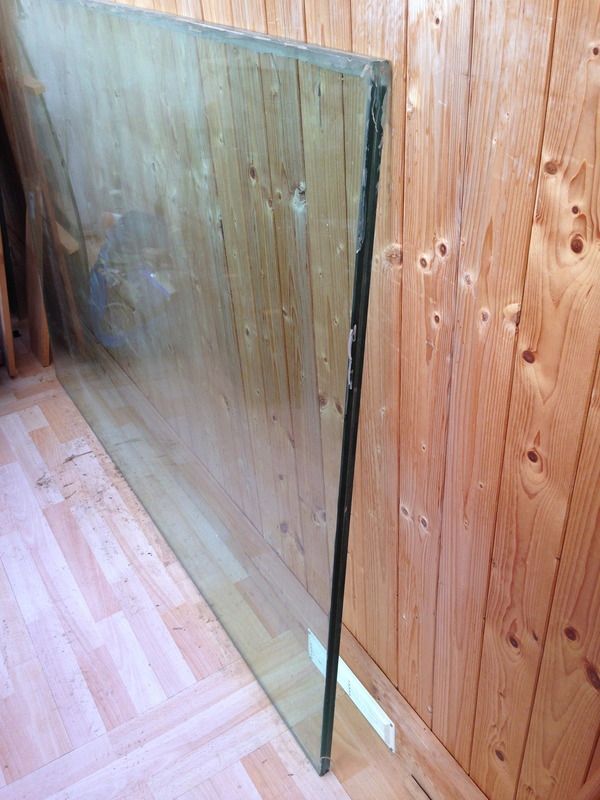
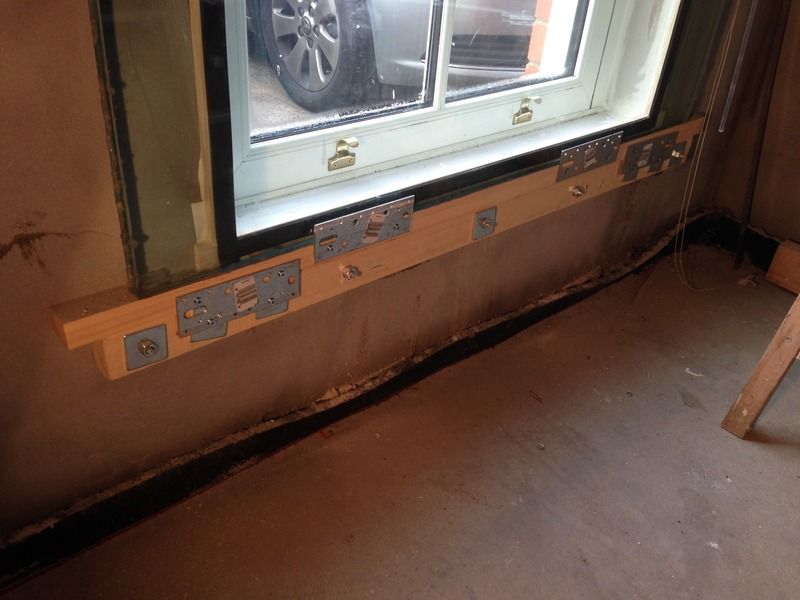
With the standard Sash window fitted to the main shell I created a solid frame behind that and then put a strip of sponge acoustic tape (the black line in the photo) around that edge. Then fitted a wooden support bar below the window - having had the structural engineer calculate the bolting method as each piece of glass was very heavy. The studio glass was then pressed up against the sponge tape to provide a nice seal. That was the outer piece - the inner piece (not yet shown) would be incorporated within the wooden stud work "room within a room" shown in the previous section. Therefore there would be no contact between the 2 pieces of glass or their frames and with approx 100mm air gap.
Doors
The layout meant we would have 2 sets of twin doors - one set to enter the main studio (from the hallway of the house) and then one set from the studio in to the control room. There would only be approx 250mm air gap between the door pairs in each set but due to the house design that was the only real way to go. I opted to construct my own doors from standard blank fire doors - good solid and ready available. One of each set would be 1 hour fire rated - 54mm thick, heavier and more expensive (approx £120 each) and the other being a 1/2 hour rated fire door - 44mm thick, lighter and cheap (approx £28 each). The plan was to then screw / green glue a 25mm sheet of mdf to each door - approx 10mm smaller than the door to create a step effect allowing for acoustic seals (both face and perimeter) to be used. The door frames would be made from sheets of 25mm marine plywood, stacked up to form the corresponding staggered shape. Having a close friend as a joiner and with a local workshop was extremely handy.
Strips of marine ply cut up to form the frames
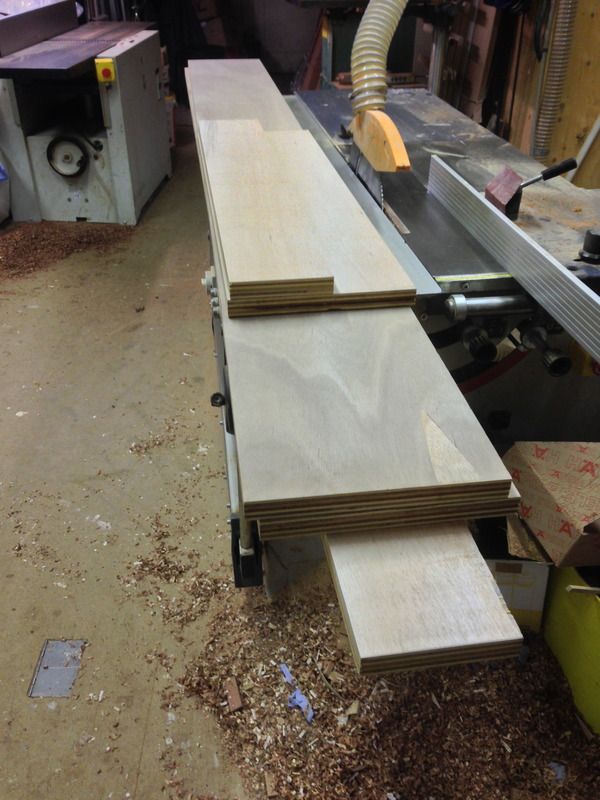
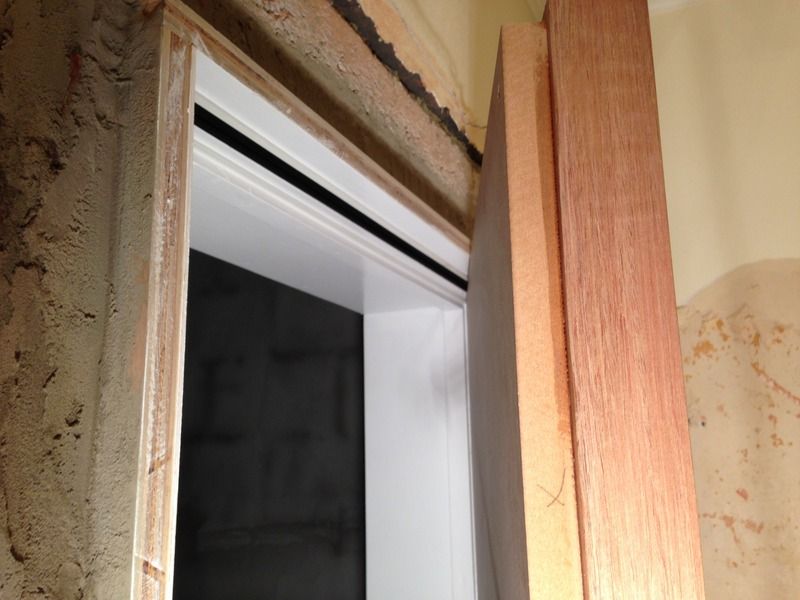
The layers being built up to form the frames. The 2 top cross pieces are shown along with the first of 2 side pieces - the first side piece being held in by chemical anchor bolts for strength - the exposed head of the bolt shown will be trimmed and incorporated in to the 2nd side piece once it is fitted. The thin slots are to accommodate some acoustic seals. I am using a mixture of slot-fit and adhesive seals as a bit of an experiment.
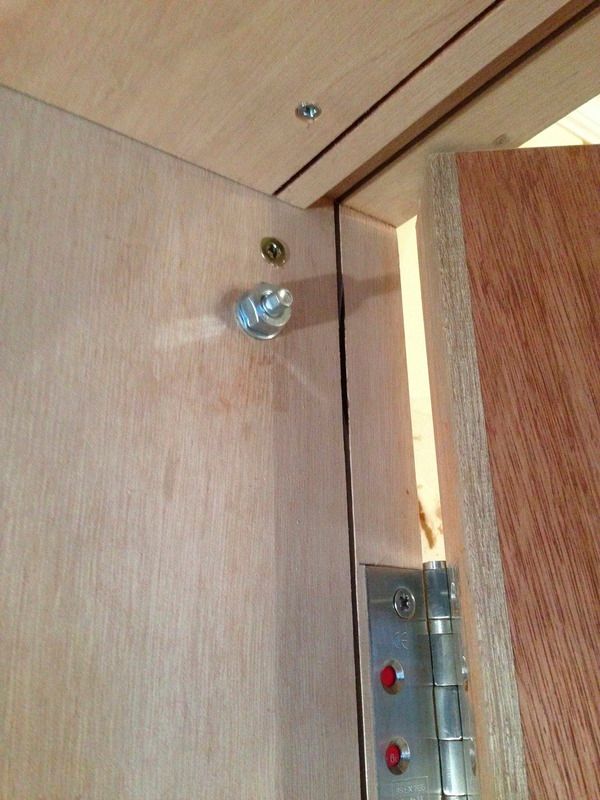
The 2nd side piece of the frame is now fitted and painted - the unpainted door is also mounted and has the screwed and green glued mdf layer fitted. Some of the acoustic seals are now also in place - face seals, perimeter and corner were all used, thanks to a local company having a number of "free samples"

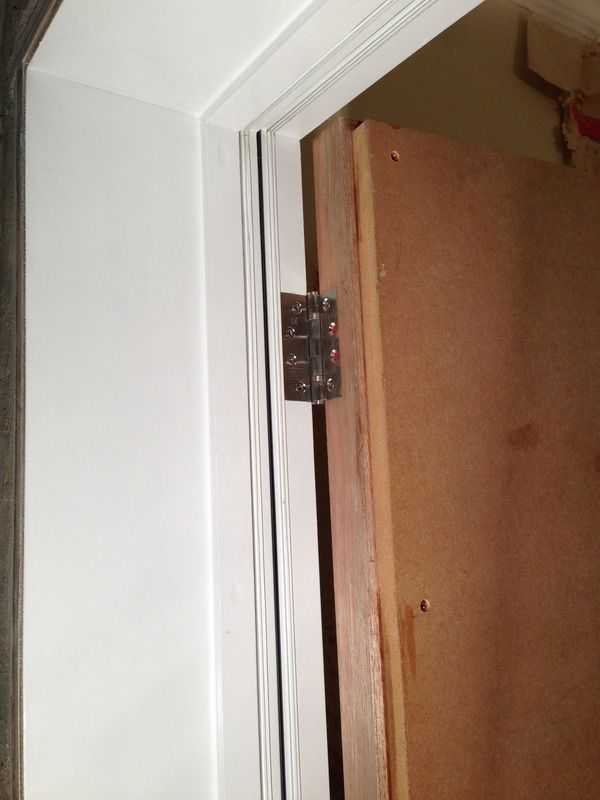
Everything sitting nicely prior to all the gaps being filled. The patterned floor tiles are from the house being Victorian - circa 1900. The brickwork was absolutely solid - good from a build point of view, not so good when trying to alter !
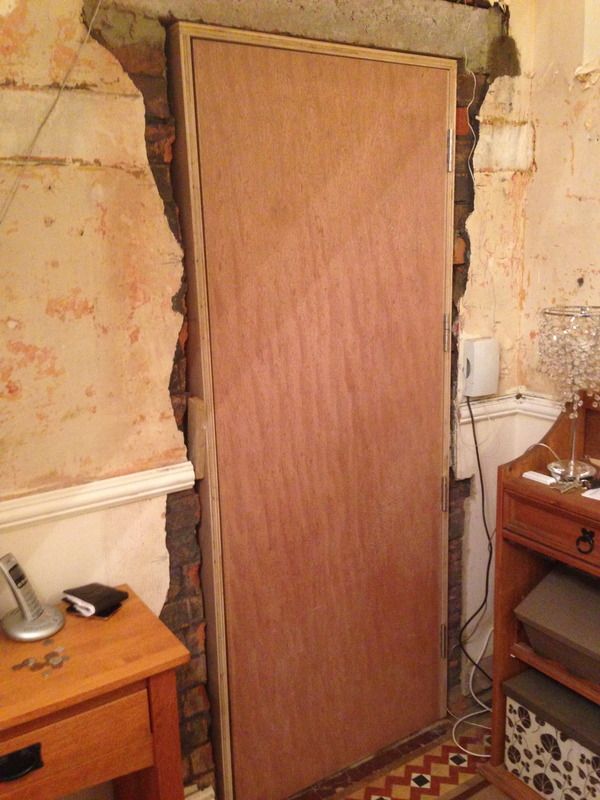
The bonded marine ply meant we could get mortar packed in tight without fear of distorting the wood.
As the door is in the hall way of the main house I fixed some thinner MDF to create a matching pattern to the existing doors in the hallway and gave it a paint. The extra large handle is needed as the door is held in place purely by the action of the perimeter acoustic seals which has worked out nicely as it saved me having to buy / install closers. It just needs a bit more pressure than normal to open / close but has worked great.
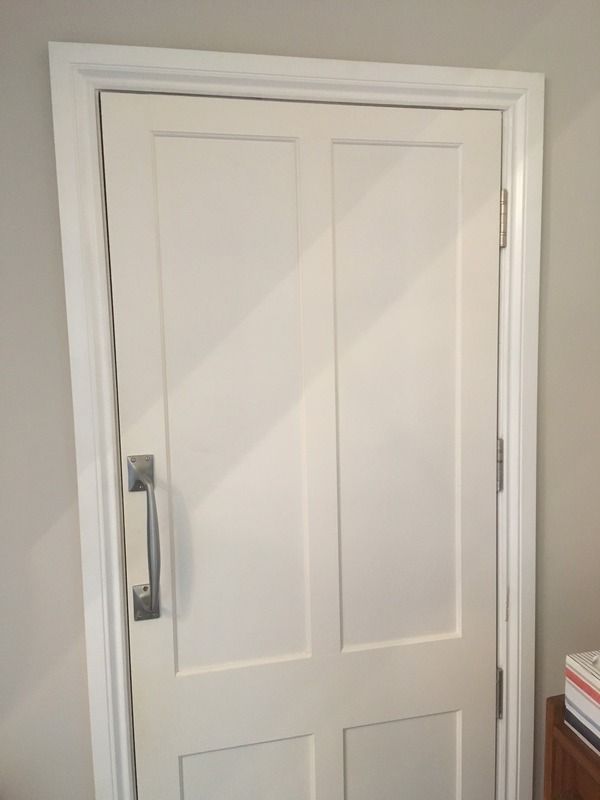
I'm really pleased with the outcome - the doors were always going to be the weak link in the whole design but they work nicely - the kitchen diner is just the other side of the door from the studio and even with my lads metal band going full tilt the noise when sat in the kitchen / diner is reduced down to that of someone having a radio playing through a typical bedroom door so we are pleased. Doing all the work myself and having the free help of my joiner friend meant that all 4 doors / frames and the materials probably cost me around £500 in total + a few beers for my friend. I even bagged all the acoustic seals free of charge - being in the sales game myself the "gift of the gab" does come in handy at times

 and with more building regs red tape than most then I'm kinda confident they know what they are up to.
 to saunter in here a mere 4 YEARS
  after my last post but a job change and a few other things meant I got a little distracted.


 .
.