Hi everyone.
I currently have a spare room which i would like to fit out for both recording and mixing. I have arranged everything in point form to make reading easier but if theres any more information you require let me know. Most of my knowledge about setting up a room has come from this forum (a big thanks to everyone...) however there is still quite a lot i dont understand or do not know.
THE ROOM
The room is 3585mm x 3170mm, with a height of 2420mm.
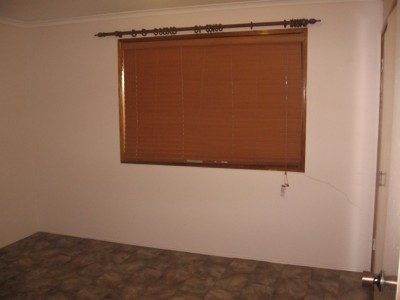
There is a glass window with blinds (1840 x 1280) on the north wall and a built in wardrobe on the eastern wall however it will remain closed during production so the wall will be mostly flat except for skirting.
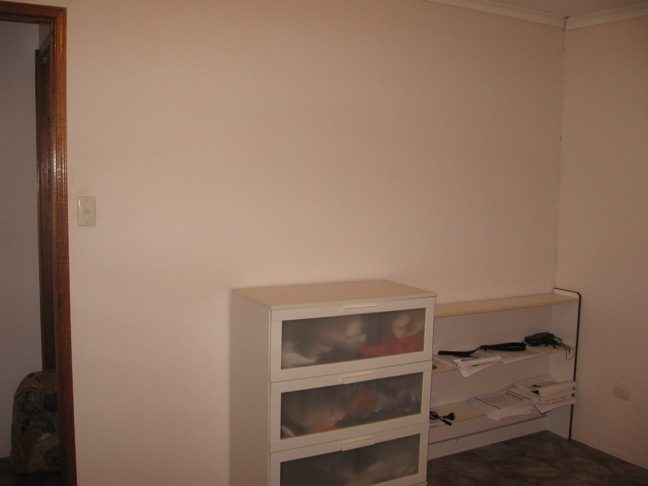
Door into the room is on the southern wall, which will also be closed during production
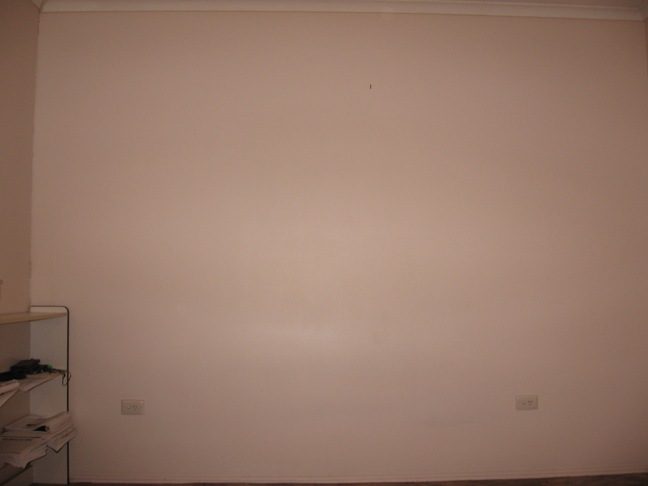
On the west side is blank wall however this is where the desk computer etc is located
MADE OF
The walls are fibre board, and the entry door and cupboards are painted a smooth glossy white.
I have a wooden desk facing the lank western wall (complete with speakers, computer etc etc etc) and will be the only furniture in the room
The windows have wooden slates, blinds which can be opend or or removed
WHAT I WANT TO ACHEIVE
The room is going to be used for both recording and mixing. Recording mostly guitar and vocals. My setup is instruments or mic mostly straight into the Mackie Onyx interface and am using cubase 5. Music is mostly rock/pop
While recording i mostly want the room to function as a large booth to capture a decent sound for vocals mostly. FOr mixing, i obviously just want it as dead as possible.
Isolation isn’t a big issue as neighbours aren’t a large concern at the moment as I wont be playing to loud (Electric guitar is through guitar rig and no live drums = less noise)
PROPOSED SETUP
I will be creating a number of panels (mostly bass traps to begin with) as per the ones mostly found on this site.
The material I will be using will be Insulco Semi Rigid (rigid fibre glass insulation) in 2400x1200x100
I think below is its details
Product thickness 125hz 250hz 500hz 1000hz 2000hz 4000hz NRC
Semi Rigid IB (nil) 100mm 0.62 1.19 1.21 1.07 1.05 1.05 1.15
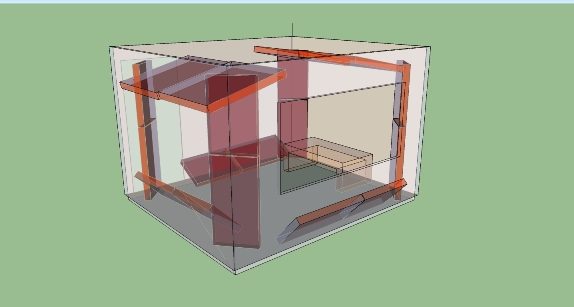
I am looking at first putting bass traps in all corners, including wall/floor and wall/ceiling before paying attention to the walls themselves. I will also be creatin a bit of a floating/angled ceiling that will cover approximitly two thirds of the ceiling.
Once the bass traps are completed it, i will then start looking at treating the rest of the room, however this is where i becomed confused as what i require.
As I said I want to be able to use the room for both recording and mixing, and as I understand it, a mixing room you require to be much deader than recording so was looking at having boards I can move around, or take in and out of the room.
SOME QUESTIONS I HAVE...
1) As i said above, i understand there is a difference between setting up a room for tracking and mixing. My first priority is to setup the room first to get a decent recording as i need to get the takes down before i can mix them, however i am unsure how to treat the room for this purpose. After having fitted the bass traps, how do i go about setting up the room as a say a large booth etc for recording
2) Should I be placing all 100mm thick insulation or should I also have some 50mm thick in various areas for more varioation (I was thinking of 100mm thickness for ceiling and bass traps in the corners and than 50mm thickness everywhere else
3) Is 400ml wide panels enough to be effective as a bass trap, or is 600 ml better as a corner bass trap, and do they need to be effectivly sealed to the wall or can they just be lean to's.
4) The window frame has a depth of 85mm, I was thinking of making a panel that sits in the window is this better than having a glass surface, it has slated blinds over the window which can be taken off or left on
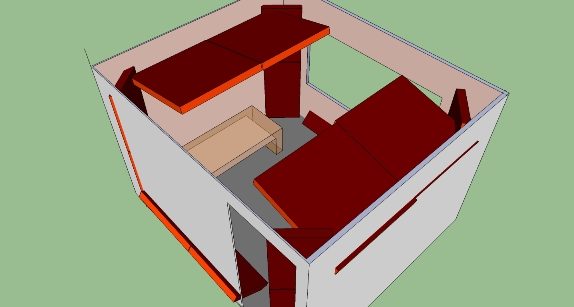
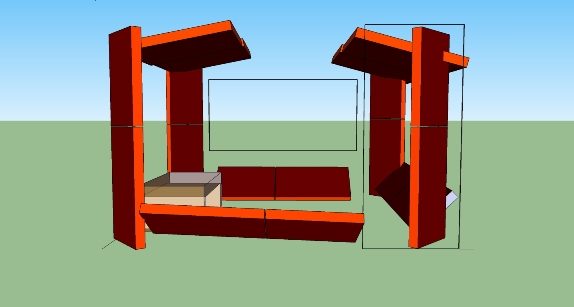
I have attached a few photos and some sketchups of my proposed bass panelling layout (excuse my sketchup skills)
Thanks for reading
North with window
North.jpgSouth with entry (furniture to be removed)
South.jpgEast with wardrobe
Looks pretty good. Except for a few things.
Here is what I'd do. Use all 100mm. Treat room as Control Room first. Use either Nested 100mm panels or stacked diagonals to make Superchunks, floor to ceiling with lightweight film over absorption material for reflecting Mid/Highs. . Use 100mm Panels at front, front sidewalls and ceiling for Early Reflections. Treat rear wall with either 1'x1' x100mm Patchwork Panels, or a 4'x4'' Panel centered between Corner absorbers same as front. Or use a Polycylndrical bent plywood "diffuser"(actually a "scatterer"), with patchwork absorbers between corner bass traps. Use Ceiling Corner bass traps of either diagonal panels or Superchunk style.
Here is what I mean
Now for my disclaimer. I ain't no expert. But for rooms where construction is not possible, these are commonly accepted solutions for basic small room treatment. However, there are many schools of thought and alternative views. These are mine.
Remember this though. Small rooms are difficult to tame in terms of room response. Furthermore, one room studios suffer the limitation of headphone monitoring while recording. But recording is as much art as it is science, and when push comes to shove, many recordings are successful even though the artists and engineers had a less than perfect environment to do so. However, the key goal here is TRANSLATION. Once you treat your room whereby you are satisfied that the recordings "translate" to a variety of systems and environments, then your room is doing its job. This means you get to the point where you TRUST what your monitors/room tell you. This takes time and effort to test your recordings as I mentioned.
Anyway, good luck with your room.
Thank you for the reply, its very much appreciated
When you say "with lightweight film over absorption material for reflecting Mid/Highs." Im assuming thats just the common burlap etc that everyone uses for their panels
Cheers
JK
When you say "with lightweight film over absorption material for reflecting Mid/Highs." Im assuming thats just the common burlap etc that everyone uses for their panels
No, the fabric is another thing entirely. What I'm refering to is a 2 to 4mil thick plastic film, like painters use on floors to protect them. Or landscaping films. Usually comes in rolls, or folded sheets. You staple it over the insulation prior to fastening the fabric. Used like this, LF easily transmitts within the insulation, while mid/high frequencies get reflected. This keeps the room from getting too dead Try it before fastening fabric. Let your ears tell you when it sounds good in the room. However, I wouldn't use it on the sidewall and ceiling units. Those are for absorbing early reflections, which are basically mid/highs, as LF modes terminate in corners.