Air tight is what you are shooting for.
And this is exactly the reason you have to have good ventilation, air moving in and out. That and anywhere air can go sound can follow.
So if one has the opportunity to fill and/or caulk every crack he runs across, you think he should?
I'm asking because I think I'm sitting in the middle of that opportunity and wondering where to stop.
Is there any sort of air-exchange calculator online? [he says with the search toolbar 6 inches from this window]
Hmmm.....so that's where the mini-split comes into play!
So if one has the opportunity to fill and/or caulk every crack he runs across, you think he should?
Yup! It it looks like air might be able to get through, then seal it. And if it looks like no air could possibly get through, ever, then seal it anyway, just in case...
That's my philosophy, at least. Maybe others don't go to such extremes, but I figure that if I'm spending all this time and money to build the place, it would be really sad if all the little corners that I cut along the way to save a couple of bucks, turned out to wreck the isolation or the sound....
- Stuart -
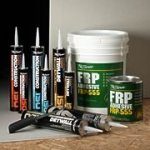
If this is the preferred indoor sealant (at least I think it's indoor-only):
Recovered from web.archive.org — originally hosted at http://www.contractorstoolsupply.com/bmz_cache/5/5a7024e4cb5fe8ffdd6de07a7be6da14.image.150x150.jpgWhat is the preferred exterior sealant?
If you built a completely sealed, single drywall, division between two rooms you would have a degree of isolation from room to room.
If you made a nail hole in the drywall between the rooms, yes a nail hole, you immediately link the air and thus allow the sound (air) pressure waves into the other room. It becomes a speaker, as it were, and the bigger the hole, the bigger the speaker.
Therefore a soundproof room is an airtight room but then unless you add fresh air, you'll eventually die in it!
Most rooms in the home have spaces to allow the air to exchange or you have windows or some one opens an outside door and fresh air gets in - not so with closed up studio.
A studio should be airtight and have excellent air conditioning. Ask your aircon guy to UP the fresh air input, you'll appreciate the difference.
"What is the preferred exterior sealant?"
Caulk for building exteriors should be compatible with the material you are using. Brick, vinyl or wood have caulks designed to be used for this material. Caulk for wood might be a siliconized paint-able mildew resistant type. This caulk may not have a high UV rating as the manufacturer expect it to be painted.
With brick the caulking used is often a urethane type that is high UV and paint will not stick to it. But it does come in different colors so matching may not be an issue.