Hi,
humans ear is an incredible gift,
the threshold of hearing matches the softest sound possible in air,
basically it can't be more sensitive and perfect than it is already unless we move to a different planet without air.
because of that I think room acoustic is very important,
Some modern music and some musical instruments can become very loud and definitely damaging if in the hands of peoples that just don't know or don't care or can't feel, or just can't afford.
At the end of a bad day when you go bed you feel that little whistle in your ears ... I guess it happen to everybody .
I'm a drummer , I can't practice inside my small room, is too damaging.
I love this instrument and I can play very soft but the sound of this instrument inside a small room is too strong and unpredictable.
large rooms are less damaging and large professional recording room even better, but what I have is a small room.
Because I already experimented with some of the conventional approaches , because I can't afford, because still I can't practice and also because I'm crazy. I believe in experimenting.
My goals,
1) reducing the intensity of the damaging reflections uniformly around the room, about 30% of the intensity or whatever is needed for about 1/2 second reverberation time.
2) 100% coverage of the walls and ceiling
note: (very porous materials like fiberglass or foam absorb to much for this purpose)
3) Excluding any hard very reflective materials (drywall , wood, or similar) on the last layer of the acoustic treatment toward the room.
4) keep it simple and affordable, a drummer garage.
So... let's start discussing about some different approaches:
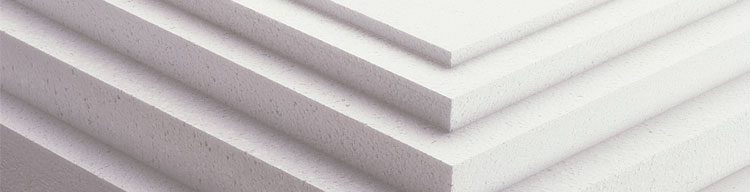
What about simple tick polystyrene for example, I know it is not an acoustical material but still absorb and reflect sound, what happen when you cover 100% of the walls an ceiling? :D
P.S. sorry for the edits I'm cleaning some mess...
boss you need to look into some ear plugs and be done with it.
:?
Yea... I do use some ear plugs or the headphones... The one you know reduce 20hz to 20khz? The one I have reduce only the highs I guess...
It is more dangerous because you end up playing louder than normal when you don't feel the highs.. but in reality all the mid and lows are still there damaging...I don't trust that...
The earplugs/headphones reducing only the highs should give a great clue as to what treating the entire wall surface with one material should do.
If you truly believe in experimenting, try it and let us know what happens.
You learn more solidly like that anyway.
The earplugs/headphones reducing only the highs should give a great clue as to what treating the entire wall surface with one material should do.
If you truly believe in experimenting, try it and let us know what happens.
You learn more solidly like that anyway.
question:
100% coverage
125 Hz 250 Hz 500 Hz 1 kHz 2 kHz 4 kHz
0.30 0.30 0.30 0.30 0.30 0.30
or
30% coverage
125 Hz 250 Hz 500 Hz 1 kHz 2 kHz 4 kHz
1.00 1.00 1.00 1.00 1.00 1.00
which of the two above walls will absorb more bass frequencies?
boss you need to look into some ear plugs and be done with it.
:?
Yea... I do use some ear plugs or the headphones...
The one you know reduce 20hz to 20khz?
The one I have reduce only the highs I guess...
It is more dangerous because you end up playing louder than normal when you don't feel the highs.. but in reality all the mid and lows are still there damaging...
I don't trust that...
http://www.zzounds.com/item--VICDB22
"Non-electronic headphones which reduce overall noise levels by 22 decibels. Ideal for practice."
Decibals(loudness), not frequency dependant. :)
what is the range of frequencies of the drum kit?
also, I think the ear plug idea or sealed headphones are the way to go. the headphones work because you can use them to play recorded music while you practice, you can slip them off if doing pad drills or quiet parts, and slip them back on for harder stuff.
generally speaking the ear plugs/phones will do the job.
room treatment - deep scattered absorption on the walls, deep absorption overhead - cloud or trap.
http://www.zzounds.com/item--VICDB22
"Non-electronic headphones which reduce overall noise levels by 22 decibels. Ideal for practice."
Decibals(loudness), not frequency dependant. :)
what is the range of frequencies of the drum kit?
also, I think the ear plug idea or sealed headphones are the way to go. the headphones work because you can use them to play recorded music while you practice, you can slip them off if doing pad drills or quiet parts, and slip them back on for harder stuff.
generally speaking the ear plugs/phones will do the job.
room treatment - deep scattered absorption on the walls, deep absorption overhead - cloud or trap.
Range of frequencies of the drums, below and above humans ear, a floor tom can go down at 30hz and the bass drum you can just feel it, drums with thin drum shells can resonate very low.
to get an idea of a drum shell go:
http://www.dwdrums.com/
than click on:
videos
Neal Peart and new x shell-
jhon good and drum pitch
You can tune a drums to the fundamental of the shell if you want.
About ear plugs, to be honest it's kind of crazy! That's why everyone play so loud today .. I like acoustic music , I like upright bassists without the amp!
today unfortunately music become ear plug...kind like a sad reality.
Noooo , I prefer a good sounding space for rehearsals and recordings of creative sensitive acoustic music and a drum pad for practice.
[quotequestion:
100% coverage
125 Hz 250 Hz 500 Hz 1 kHz 2 kHz 4 kHz
0.30 0.30 0.30 0.30 0.30 0.30
or
30% coverage
125 Hz 250 Hz 500 Hz 1 kHz 2 kHz 4 kHz
1.00 1.00 1.00 1.00 1.00 1.00
which of the two above walls will absorb more bass frequencies?
[/quote]
Coverage with what?
Wood - probably same
Rubber - no idea
Auralex/Sonex type foams - each company has suggestions for this
Bass traps - search function
Really, if you like acoustic music (upright acoustic bass without an amp), you would be playing with less volume and more control. This type of music requires self control and self 'mixing' with the quietest instrument.
This won't be damaging to your ears.
If you want to play louder, you know what happens in a small room.
Get several heavy moving blankets and throw them over mic stands (booms shaped like tall "T"'s). EXPERIMENT, as you stated you like to do.
Place them near your walls, in corners, completely covering the walls, near the drums, away from the walls, etc...
It will give an idea as to where the sound is traveling and the effect of slight absorbtion. Simple and affordable.
Bass absorbing is very tough in small areas. Highs are easy (too easy). Understanding this makes it easier to understand thousands of other posts/threads on this forum.
The more usual solution is a stripe or checkerboard pattern of highly absorbent material. It's not likely you'll find a single material that absorbs 30 percent uniformly across a wide range of frequencies.
--Ethan
Mmazurek, maybe my question was too vague ....
the Experiment is:
Treating the entire walls and ceiling (100% coverage) with a material that absorb only about 30% of the sound and not 100% of it like fiberglass or foam,
the reduced absorption coefficients curve of the material or combination of material should be similar to the reverberation time curve of the room with concrete floor and drywall.
my previous question was about bass frequencies absorption.
example:
wall 1)
100% coverage (material with reduced absorption) you just cover the entire wall.
absorption coefficients of the material:
125 Hz 250 Hz 500 Hz 1 kHz 2 kHz 4 kHz
0.30 0.30 0.30 0.30 0.30 0.30
or
Wall 2)
30% coverage ( broadband fiberglass or foam) I don't care if on the corners or with air space or anywhere you want to put it ..up to you.
absorption coefficients of the foam or fiberglass:
125 Hz 250 Hz 500 Hz 1 kHz 2 kHz 4 kHz
1.00 1.00 1.00 1.00 1.00 1.00
which of the two above walls will absorb more bass frequencies?
The more usual solution is a stripe or checkerboard pattern of highly absorbent material. It's not likely you'll find a single material that absorbs 30 percent uniformly across a wide range of frequencies.
--Ethan
perhaps not perfectly uniformly at all frequencies..
but with an absorption coefficients curve similar to the reverberation time curve of the usual drywall/concrete floor room
the experiment is:
1/2 second reverberation time, 100% coverage.
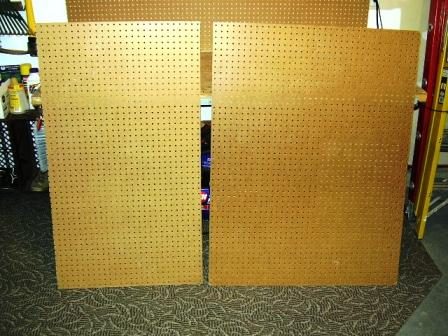
Maybe pegboard spaced from the wall covered with thin fabric with polystyrene behind?:D
You can fine tune this room all you will like, as perfect as you can get. Two things are always going to be in the way. You have no isolation on >your< side and you have a leaking room that is surrounded on all sides by other big noisy leaky rooms.
Acoustic treatment is not going to stop that.
I'm not certain, as no one else could be, what it is that you need that you have not already gotten. At some point in a build you hit a point where you have collected all the information that can be collected. There are no more questions that can asked that have not already been answered. It is then that you must step out on faith and work on your build.
You are at that point.
All these numbers thrown around do not mean a thing if you do not take the required time to build a panel, make a bass trap, erect a sonotube, etc. and install it.
Hope this helps in some way
You can fine tune this room all you will like, as perfect as you can get. Two things are always going to be in the way. You have no isolation on >your< side and you have a leaking room that is surrounded on all sides by other big noisy leaky rooms.
Acoustic treatment is not going to stop that.
I'm not certain, as no one else could be, what it is that you need that you have not already gotten. At some point in a build you hit a point where you have collected all the information that can be collected. There are no more questions that can asked that have not already been answered. It is then that you must step out on faith and work on your build.
You are at that point.
All these numbers thrown around do not mean a thing if you do not take the required time to build a panel, make a bass trap, erect a sonotube, etc. and install it.
Hope this helps in some way
isolation is very good , not problem at all! super!
room acoustic .... bad.
You wanna see all the panels and stuff I made already? : :D:cry:
Kind like difficult stuff for me..(just a drummer)
:roll: , I studied in the book that the foam is very good stuff, the book axially recommend it...
very confusing for me, how in the world?
I asked to an acoustical consultant,
more later
learning and comprehending written English is actually a good skill in this case as the answers you seek are in those books...
if all the answers are in those books, why a recording design studio forum then?
Timo,
You said you liked experimenting.
When I saw your pictures I must smile. That's hardly experimenting.
Books help you to sort out your brain in a logical sequential manner and explain the principles involved.
A forum can help you to go further in-depth on specific uncertainties.
Experimenting means trying something in a systematic way, keeping the variables limited, so you can conclude something from the experiment.
Making a patchwork from e.g. your ceiling is not or hardly experimenting.
Once you understand or feel the principles you're after, you can check which materials answer your goals.
:) Reading your comments and seeing your pictures makes me understand gullfo's comment.
Timo,
You said you liked experimenting.
When I saw your pictures I must smile. That's hardly experimenting.
Books help you to sort out your brain in a logical sequential manner and explain the principles involved.
A forum can help you to go further in-depth on specific uncertainties.
Experimenting means trying something in a systematic way, keeping the variables limited, so you can conclude something from the experiment.
Making a patchwork from e.g. your ceiling is not or hardly experimenting.
Once you understand or feel the principles you're after, you can check which materials answer your goals.
:) Reading your comments and seeing your pictures makes me understand gullfo's comment.
Dear Eric, your presence it's important, I'm not done with my funny drummer story jet.. :) . Yes I also did many systematic experiments, then I stopped, because I was a little sick and tired.
Also I didn't want any war against any company or between you and gullfo... so I decided to quit right there!
OK.....I will edit the funny comments now. :cry::cry::cry: