I posted this in the studio desgin forum as well this is as much an acoustical question as a dsign. If you can help i will appreciate it.
im San-Te. I have been looking for a site like this for a long time and im so glad i found it. I live in the NewYork area but i bought a home in Ga and will be moving down there shortly. I currently have some space in my basement and I want to build a control room and vocal booth there. I have a freind that will help me do the building. He has built studios before but im not sure if he's done them the proper way. So im doing my homework and I will assist him in the process.
I have neighbors on both sides so I want to achieve the best sound proofing that i possibly can. The space that i have to work with is 12w x 10L x 7.9 control room. the vocal booth is 6x6 room I know the cieling is kinda low so im going to have to make adjustments there. not to sure how, so if anybody can shed some insight on the cieling thing that would be great I have been studying the construction process and i have a desgin (sort of) but Im not sure if it is worth anything. Ive been looking at acoustics also and i want to make sure that i have the best acoustical desgin as possible.. Although i have neighbors on both sides proper acoustics are more important to me than soundproofing.
so here are my goals
Good soundproofing (not sure of the db level but descent isolation so that im not disturbing my neighbors during the day time. I dont plan on mixing to late at night but i want to be courteous to those around me. Im not going to be doing any live recording like drums and stuff. Just simple Mixing and vocal recording on a Daw..
Acoustics is a MUST. I want to make sure that i get the best acoustical desgin for my space b/c its a very small space.... i want the mixes to sound good in the studio but GREAT in the "real world".
Here is a picture of my design i hope to use.. A friend of mine sketched it for me. After looking at some other ideas on the site i started to question the desgin... So if anybody has any kind of input i would greatly appreciate it.
Is this desing worthless????? Assistance Needed
-
san-te'
- Posts: 2
- Joined: Fri Sep 29, 2006 5:09 am
- Location: u.s.a new york/atlanta
-
z60611
- Posts: 251
- Joined: Fri Jun 18, 2004 9:08 am
- Location: Ontario, Canada
soundproofing:
(I'm a home theatre guy, not a recording guy)
A couple of things to get you up to speed. This is aimed at the 'top DIY' end of things. You'll probably want something simpler.
Think multiple frequencies (and ignore STC). If you build a wall/room system that stops noise well at 20hz to 80hz, I guarantee you that you've got 125hz to 20000hz solved.
It's not only the noise getting out (complaining neighbours), but the noise getting in (passing train wrecking a good recording). Once you get an idea how loud it is now on each side of the wall, and how quiet you want it on the other side, you'll know what you want to build by using the ir761/811 links below.
http://www.bobgolds.com/WallCharts/Nois ... r_pg35.jpg
http://www.bobgolds.com/WallCharts/Traf ... _pg109.jpg
Sound will leak the most through the weakest link. That could be:
a) walls
b) floors
c) ceiling
d) assorted holes: electrical, cracks around the drywall
e) HVAC ducts (Superduct or similar lining, or mufflers, bends, etc)
f) doors (Rod's superdoor, BBC Door blanks, companionway exterior doors, etc)
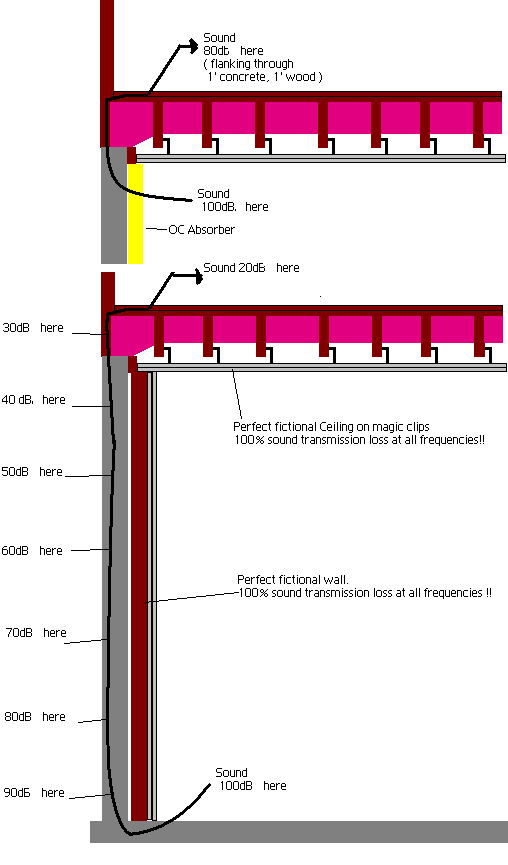
g) flanking
Mass is your friend (e.g. concrete) -- right up until your building structure collapses and kills people. A structural engineer, or even your local building department if you ask a simple one sentence question, may be of help. This is less of a problem with basements.
http://www.bobgolds.com/Flanking3.gif
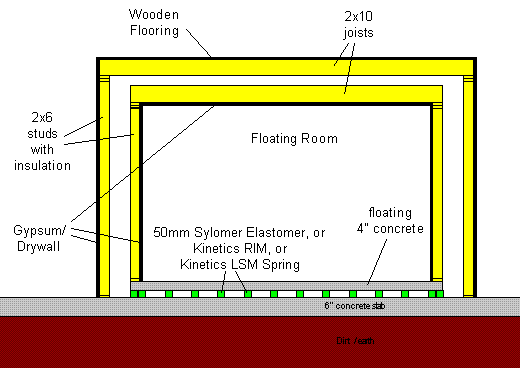
http://www.bobgolds.com/FloatingRoom.GIF <- floating floors are not for amatures, but room-in-a-room ceilings aren't too hard. Acoustik Mat is an easier alternative on the floor.
http://www.bobgolds.com/WallCharts/Quad ... eafSTC.htm
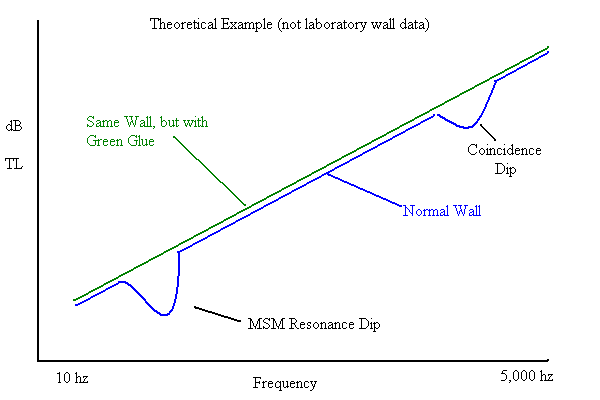
http://www.bobgolds.com/GreenGlueMassLa ... nceDip.gif <- Green Glue (it's not glue, it's a viscoelastic constrained layer damping product -- do not use glue!)
http://www.bobgolds.com/WallCharts/Gree ... arison.gif
http://irc.nrc-cnrc.gc.ca/fulltext/ir761/ir761.pdf <- walls
http://irc.nrc-cnrc.gc.ca/fulltext/ir811/ir811.pdf <- floors/ceilings
If double stud walls aren't your style, or room-in-a-room ceiling isn't possible, then perhaps RSIC decouplers on a single 2x4 wall or joist ceiling.
http://www.bobgolds.com/Stage/DennisErskineStage3.gif <- more for home theatre buffs, but it's an example of RSIC and acoustikmat.
http://www.bobgolds.com/BuildWall2_gap_mudtape.gif
http://www.bobgolds.com/BuildWall2_zigzag.GIF
http://www.bobgolds.com/Assorted/Baseme ... onWall.gif
http://www.bobgolds.com/FlankingDamping ... ncrete.gif
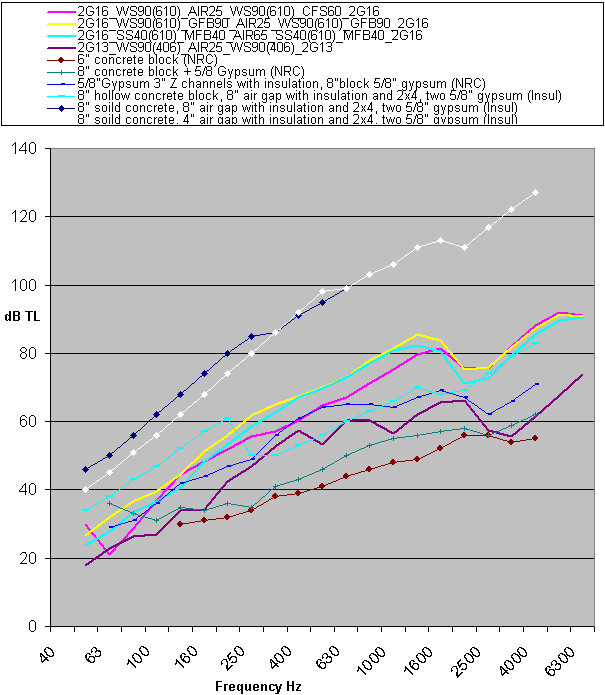
http://www.bobgolds.com/WallCharts/Doub ... eBlock.gif
Home Recording Studio: Build it Like the Pros by Rod Gervais <- lots of good ideas
How to Build A Small Budget Recording Studio From Scratch : With 12 Tested Designs by Michael Shea and Alton Everest <- 2nd book to buy.
Master Handbook of Acoustics by F. Alton Everest <- 3rd book.
BTW, 12' x 10' x 8' is 960 ft^3. 1500 ft^3 is usually a good size. If you add 6' to that (remove the vocal booth), then that's 12'x16'x8' is 1536 ft^3, although 8'x2 = 16' (modes).
(I'm a home theatre guy, not a recording guy)
A couple of things to get you up to speed. This is aimed at the 'top DIY' end of things. You'll probably want something simpler.
Think multiple frequencies (and ignore STC). If you build a wall/room system that stops noise well at 20hz to 80hz, I guarantee you that you've got 125hz to 20000hz solved.
It's not only the noise getting out (complaining neighbours), but the noise getting in (passing train wrecking a good recording). Once you get an idea how loud it is now on each side of the wall, and how quiet you want it on the other side, you'll know what you want to build by using the ir761/811 links below.
http://www.bobgolds.com/WallCharts/Nois ... r_pg35.jpg

http://www.bobgolds.com/WallCharts/Traf ... _pg109.jpg

Sound will leak the most through the weakest link. That could be:
a) walls
b) floors
c) ceiling
d) assorted holes: electrical, cracks around the drywall
e) HVAC ducts (Superduct or similar lining, or mufflers, bends, etc)
f) doors (Rod's superdoor, BBC Door blanks, companionway exterior doors, etc)
g) flanking
Mass is your friend (e.g. concrete) -- right up until your building structure collapses and kills people. A structural engineer, or even your local building department if you ask a simple one sentence question, may be of help. This is less of a problem with basements.
http://www.bobgolds.com/Flanking3.gif

http://www.bobgolds.com/FloatingRoom.GIF <- floating floors are not for amatures, but room-in-a-room ceilings aren't too hard. Acoustik Mat is an easier alternative on the floor.
http://www.bobgolds.com/WallCharts/Quad ... eafSTC.htm
http://www.bobgolds.com/GreenGlueMassLa ... nceDip.gif <- Green Glue (it's not glue, it's a viscoelastic constrained layer damping product -- do not use glue!)
http://www.bobgolds.com/WallCharts/Gree ... arison.gif
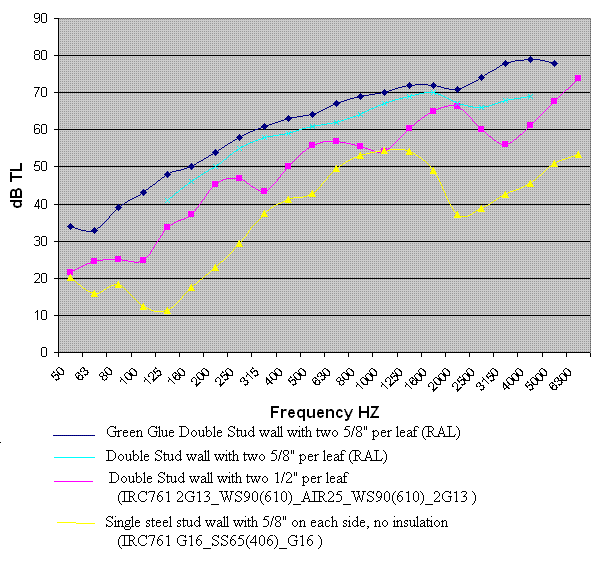
http://irc.nrc-cnrc.gc.ca/fulltext/ir761/ir761.pdf <- walls
http://irc.nrc-cnrc.gc.ca/fulltext/ir811/ir811.pdf <- floors/ceilings
If double stud walls aren't your style, or room-in-a-room ceiling isn't possible, then perhaps RSIC decouplers on a single 2x4 wall or joist ceiling.
http://www.bobgolds.com/Stage/DennisErskineStage3.gif <- more for home theatre buffs, but it's an example of RSIC and acoustikmat.

http://www.bobgolds.com/BuildWall2_gap_mudtape.gif

http://www.bobgolds.com/BuildWall2_zigzag.GIF

http://www.bobgolds.com/Assorted/Baseme ... onWall.gif
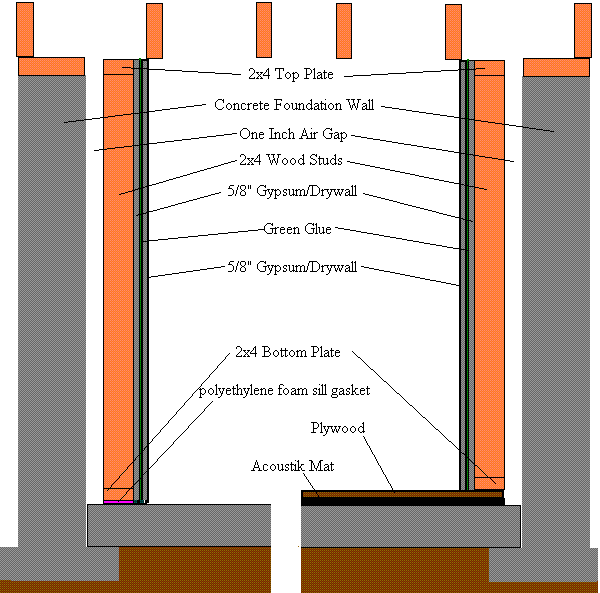
http://www.bobgolds.com/FlankingDamping ... ncrete.gif
http://www.bobgolds.com/WallCharts/Doub ... eBlock.gif
Home Recording Studio: Build it Like the Pros by Rod Gervais <- lots of good ideas
How to Build A Small Budget Recording Studio From Scratch : With 12 Tested Designs by Michael Shea and Alton Everest <- 2nd book to buy.
Master Handbook of Acoustics by F. Alton Everest <- 3rd book.
BTW, 12' x 10' x 8' is 960 ft^3. 1500 ft^3 is usually a good size. If you add 6' to that (remove the vocal booth), then that's 12'x16'x8' is 1536 ft^3, although 8'x2 = 16' (modes).