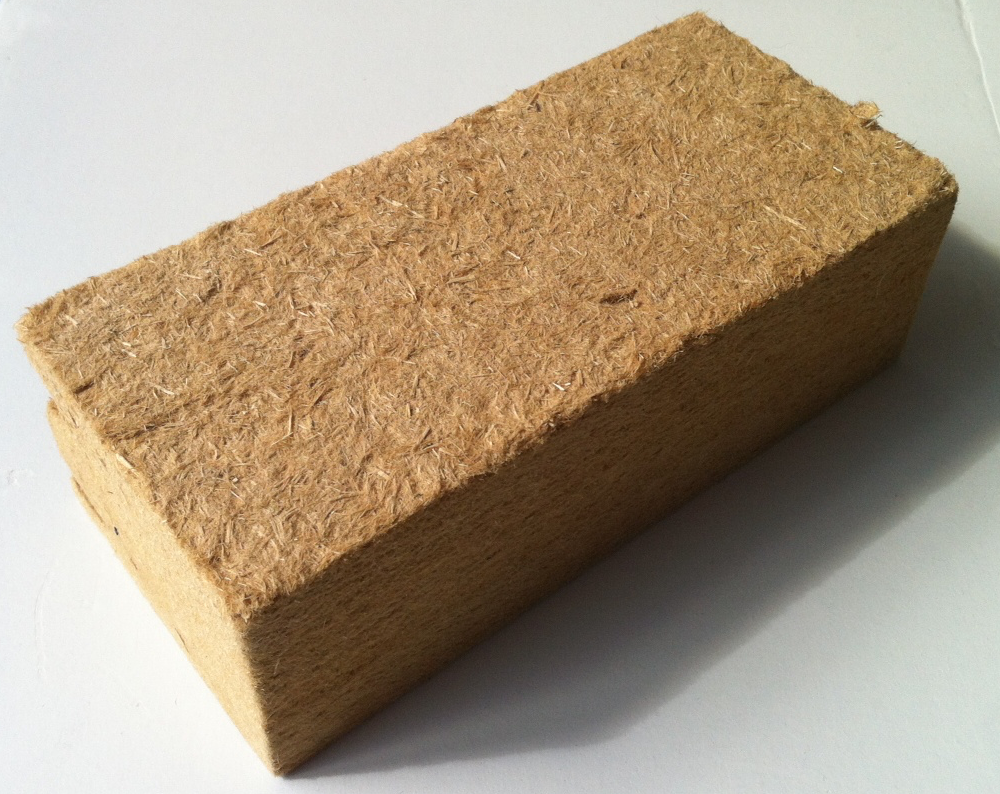
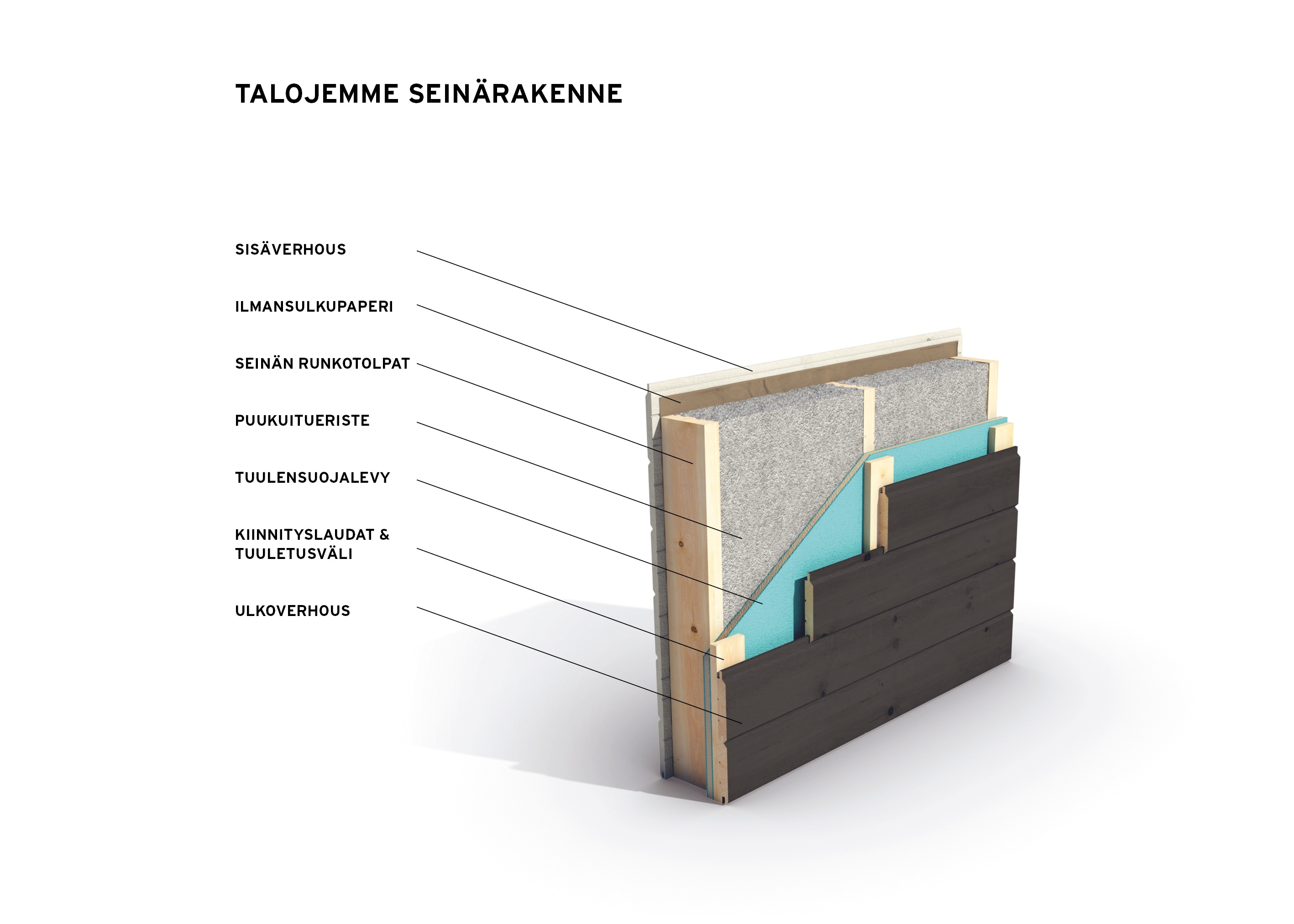
and the wall structure is normally like this:
That is a three-leaf wall, yes. So it would not provide high levels of acoustic isolation.
but no examples how bad 3-leaf designs would be
This might help:
classic-leaf-diagram4.gif
That's the exact same wall, but built three different ways. On the left, the wall is built as two stud frames, each one of which has one layer of drywall on EACH side. So four leaves. That wall has an STC value of 44.
The middle image shows the SAME wall, but with one of the internal leaves REMOVED... so there are now only THREE leaves, and LESS total mass in that wall.... yet the isolation as increased by nearly ten points, to STC-53. If you were to listen to the wall now, subjectively you would say that it is twice as good as it was: you can only hear sounds half as loud as they were before.
The final image on the right, shows the situation with the OTHER internal leaf removed and both of the removed layers of drywall now placed on the outside leaves, doubling them up. So that final example is only two leaves, but it is the exact same materials as the one on the left: same mass, same thickness, same everything. And it is ANOTHER ten points better! It gets STC-63. So subjectively, you would say that this last wall is four times better at isolating sound, and any sound that gets through would only be one quarter as loud as the original 4-leaf wall.
That's solid, real, true depictions of how isolation really works, and what penalty you pay for having three leaves or four leaves, as compared to two leaves.
That's why you will always see the recommendation here to try really hard to ONLY have two leaf walls and ceilings in your studio. Avoid 3-leaf as much as you can. And if it turns that you have no choice at some place in your studio: that you really must have three leaves at one place, then you will have to compensate for that problem by adding much more mass to all three leaves (but mostly the middle leaf), and also increasing the size of the gap between the leaves. You can compensate, yes, but it takes up more space and requires more mass, which means more money, and more complexity.
I have asked offers on local companies about design
Only ask companies that have proven experience in designing studios! I have come across quite a few architects, builders, and contractors that say they know all about how to design and build a "soundproof" wall, but in reality don't have a clue. If they use the term "soundproof", that's already a red flag, because studio designers and acousticians tend to avoid using that term: it has no real technical definition, and means different things to different people. If they say they can design your studio for you, ask for a list of customers for whom they already designed and built studios, and call those customers to ask about the design: If possible, go see the studios for yourself.
but I would like to know what would be right way to get better isolation -so I could filter the bad offers straight away

Smart move! I would ask them all what frequency they will tune the wall for, what TL they expect they will get, and what the lowest isolation frequency will be. If they can't answer all of those, then forget about that company. Ask what type of insulation they will use in the wall cavity, and if they answer with some type of closed-cell insulation, forget about them. Ask them if they think it is important to seal the walls air-tight, and if they say no, then forget them. Ask them if it is necessary to put rubber seals around the edges of doors and windows, and if they say no, then forget them. Ask them if you will need some type of HVAC system for the room, with fresh air supply, and if they say it isn't necessary, run like crazy because that's a dangerous company. Ask them if it would be better to have more leaves inside your wall, to get better isolation, and if they say yes, run like crazy... (see diagram above).
There's lots of things like that you could ask them, that would show if they understand isolation and acoustics. Those are just a few.
in this case, would the best idea to be (for best sound isolation per used money) build room within a room like this: ... where my outer wall would be that brickwall pictured above. I understand that this would create 3-leaf wall.
No. That's only a two.leaf wall. The outer leaf is the brick wall, the inner-leaf is the part that is labeled "2 x 16mm plasterboard". The rest is acoustic treatment inside the room: it shows what is called a "slot wall" on the studs inside the room. That's a tuned acoustic treatment device, and is not a leaf.
Regarding the floor, you should probably read this thread to understand about "floated floors":
http://www.johnlsayers.com/phpBB2/viewt ... f=2&t=8173
- Stuart -