Page 2 of 15
Posted: Sat Mar 08, 2003 9:33 am
by John Sayers
No - like this
cheers
john
Posted: Sat Mar 08, 2003 6:12 pm
by Oliver Sheen
I've nearly done the drawings, John. I'll post them today.
Ta!
Posted: Sun Mar 09, 2003 8:47 pm
by Oliver Sheen
Doesn't mounting the monitors so close to the corner this way cause problems with early reflections from the side walls?

Posted: Mon Mar 10, 2003 8:55 am
by John Sayers
Yes but you splay the walls with more angle, i.e. at 22.5 degrees as opposed to 12. I find it helps where you have a small room and the 60 degrees doesn't give you much width between the speakers relative to your sitting position.
Music Farm studios
http://johnlsayers.com/Pages/Music_Farm2.htm was built as a 90 degrees system. I worked there for years with and loved it. It was one of the best sounding rooms I've ever worked in and other engineer/producers recorded top selling albums out of this room.
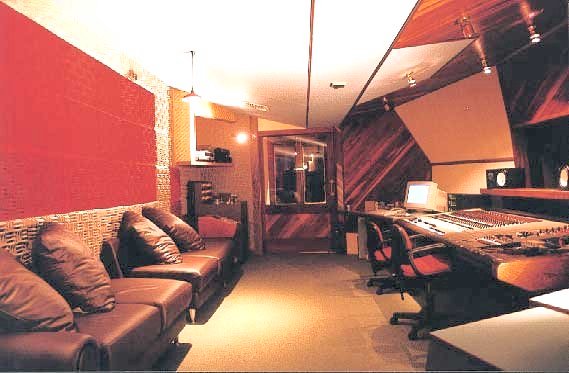
cheers
john
Posted: Tue Mar 11, 2003 4:46 am
by Guest
John,
I have a couple of questions about the speaker section drawing on page 1:
1) What are "acoustical hangers"?
2) Why is the area below the speaker not boxed in with 5/8" plywood and timber finish like the area above the speaker? Is this area performing as a bass trap?
Thanks!
Scott
Posted: Tue Mar 11, 2003 4:47 am
by Guest
John,
I have a couple of questions about the speaker section drawing on page 1:
1) What are "acoustical hangers"?
2) Why is the area below the speaker not boxed in with 5/8" plywood and timber finish like the area above the speaker? Is this area performing as a bass trap?
Thanks!
Scott
Posted: Tue Mar 11, 2003 6:37 am
by John Sayers
The front is finished in an absorbing surface. I do this because it stops reflecions from the back of the console etc. coming back at you. The acoustic hangers are sheets of soft fibreboard, wrapped in insulation and hung - yes - they act as a bass absorber.
cheers
JOhn
Posted: Wed Mar 12, 2003 8:38 am
by Oliver Sheen
What thickness is the fibreboard?
Posted: Wed Mar 12, 2003 9:23 am
by John Sayers
Its 1/2" (12mm) Oliver.
cheers
john
Posted: Thu Mar 13, 2003 11:45 am
by Oliver Sheen
and what thickness of insulation? Would the rigid fibreglass be best?
Cheers
oliver
Posted: Mon Apr 07, 2003 11:29 am
by jc71
so if I understand you correctly would you say that I could benefit from soffit mounting my Alesis monitor ones as I have always felt that they lacked bass (yes I know that I will only get so much from a small speaker)
Posted: Mon Apr 07, 2003 11:29 am
by jc71
so if I understand you correctly would you say that I could benefit from soffit mounting my Alesis monitor ones as I have always felt that they lacked bass (yes I know that I will only get so much from a small speaker)
Posted: Mon Apr 07, 2003 12:41 pm
by John Sayers
Firstly - sorry Oliver - I missed your question before - just use standard fibreglass insulation or Dacron.
jc71 - yes I'd soffit mount those speakers, I like a bit more bass myself

:)
cheers
john
Posted: Tue Apr 08, 2003 5:50 am
by barefoot
From a studio design perspective the advantages of soffit mounting are many and frankly
obvious, but let me just also chime in from a loudspeaker design perspective. Mounting loudspeaker drivers in an effectively infinite baffle (soffit) eliminates a host of design difficulties and compromises. And with those compromises out of the way the designer can more easily achieve even higher performance.
The reason I believe some recording engineers don't like soffit mounting is because it's often done improperly. The most critical aspect of soffit mounting is making sure the monitors are properly designed to work in such an application. Most nearfields and a good deal of midfields are not.
Personally I feel there's a reasonably good sized market that isn't being serviced - those looking for medium sized, medium power monitors to soffit mount in smaller to medium sized control rooms - i.e. "Mini Mains™". Maybe it's time to crank my speaker business into high gear again.
Thomas
Posted: Tue Apr 08, 2003 8:36 am
by John Sayers
I think it is Thomas

cheers
john